


Wakesurf guides
How to wakesurf: a beginner's guide
 Emma Galusha, with Ryan DeeseWorld-ranked pro wakesurfers · Elevate Wake Academy coachesAugust 2026 · 8 min read
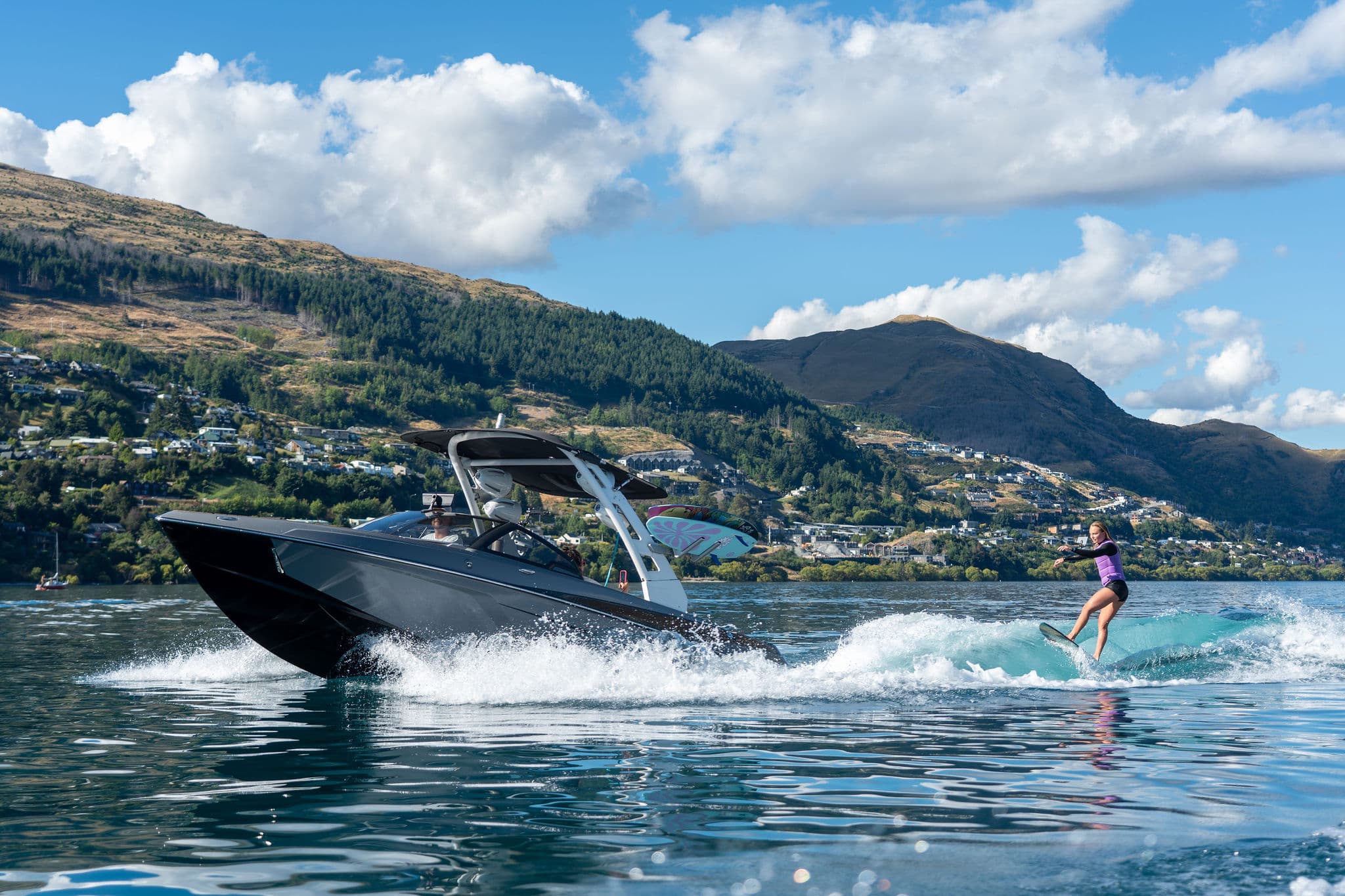
Wakesurfing is the easiest watersport to learn and the hardest one to get bored of. The boat makes an endless wave. You start on a short rope, get comfortable, then throw the rope back and surf the wave for as long as your legs hold out.
We teach this on the water every day, to riders from 5 to 80. This guide covers the same first steps we run with every new rider: safety, stance, setting up the wave, getting up, and dropping the rope.
Why wakesurfing is the one anyone can learn
The boat runs at 10.5 to 11.5 miles per hour. That's walking- the-dog slow compared to wakeboarding or water skiing. Your feet are never strapped to the board, so when you fall, you just fall into water. The board floats away instead of coming with you.
Low speed, soft falls, free feet. That combination is why kids, parents, and grandparents can all learn behind the same boat, on the same afternoon.
Two safety rules before anything else
Respect the rope. Never coil or wrap the rope while a rider is riding. If a hand or a leg is inside a loop when someone falls, that rope pulls tight. Keep it flat, keep it tidy, and put it away only when the rider is in the water.
Cover your head when you fall. The board usually washes away from you. Usually. Make covering up a habit from your very first fall, and wear a proper impact vest every time you ride.
Regular or goofy: find your stance on dry land
Regular means left foot forward. Goofy means right foot forward. The quick test: the hand you write with is usually your back foot. Right-handed riders tend to ride regular, left-handed riders tend to ride goofy.
If you skateboard, snowboard, or surf, your stance usually carries over. And if the first few runs feel wrong, switch — your body will tell you which side is natural once you're up.
Your stance decides which side of the boat you surf. Regular riders surf the left side of the wake, goofy riders the right, so the wave is always out in front of you.
Set up the wave before you get wet
A bad wave makes a good rider look hopeless. When the wave is off, it's almost always one of three things: speed, ballast, or shape. Whoever's at the wheel should also read how to drive the boat for a wakesurfer.
- 01
Fill all the ballast
Full ballast, full gas tank — the more weight, the better. Ballast sinks the boat deeper, and a deeper boat throws a bigger, cleaner, more powerful wave.
- 02
Set cruise control between 10.5 and 11.5 mph
Too fast and the wave gets long and loses its push. Too slow and it gets short and pushy. A useful tell: at the right speed the nose of the boat lifts into a slight plow — enough to sink the back end, never so much that the driver can't see forward.
- 03
Lean the boat to the surf side
Shift passengers toward the wave side, or move a lead bag across. Listing the boat to the rider's side cleans the wave face up.
- 04
Shape it with the surf system
Every wake boat has a tab system. More tab means a taller wave, less tab a smaller one. Resist the urge to max it out: a huge wave shoves beginners and kids over the nose of the board. A medium wave with clean shape teaches you faster.
Pick a forgiving board
Start on a surf-style board: thicker, more stable, and it catches the wave easily. Skim-style boards are looser and built for spins — brilliant later, frustrating on day one. The full breakdown, sizing included, is in surf style vs skim style.
Getting up: let the boat do the work
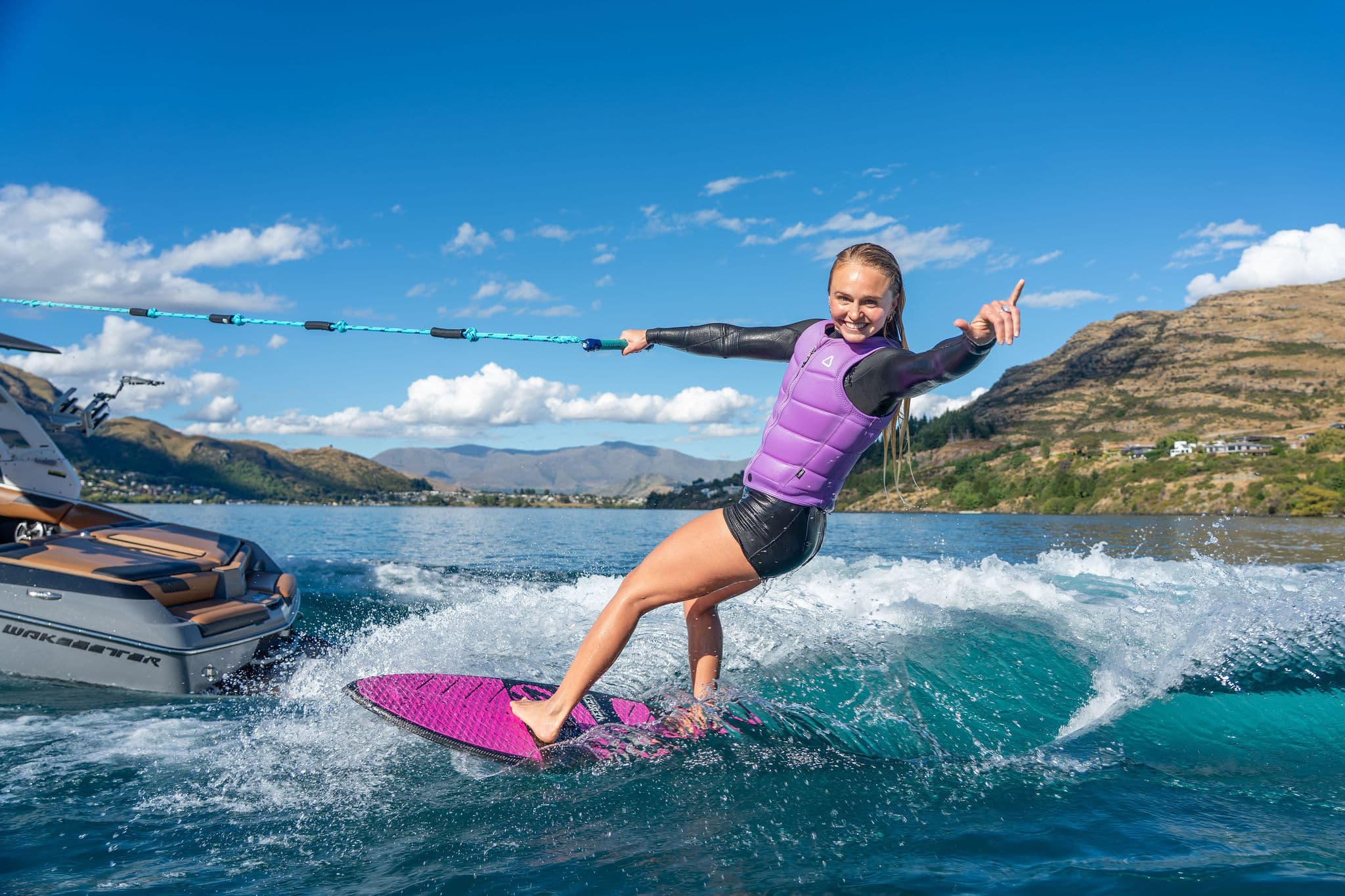
Heels on the edge of the board, arms straight, and let the boat pull you to standing — your legs push the board away while the boat does the lifting. The single most common mistake is trying to muscle yourself up by pulling the rope in, which drops you straight back into the water.
The full step-by-step, including where to put your feet and the three classic first-day falls, has its own guide: how to get up on a wakesurf board, every time.
Dropping the rope
Once you're up and outside the wake, shift a little weight from your heels to your toes. You'll drift toward the wave, the boat's push takes over, and the rope goes slack in your hand. That slack is the wave telling you it has you.
When it does, hand the rope to a spotter on the swim deck or toss the slack line over to the far side of the wake — and you're surfing.
Most riders who learn the steps in order and get regular boat time drop the rope within a handful of sessions. From there the wave becomes a playground: carves, ollies, riding switch, and eventually your first 360 — there's a guide for that too.