


Wakesurf guides
Surf style vs skim style: choosing your wakesurf board
 Emma Galusha#3 world ranked, pro women's skim · Elevate coachAugust 2026 · 6 min read
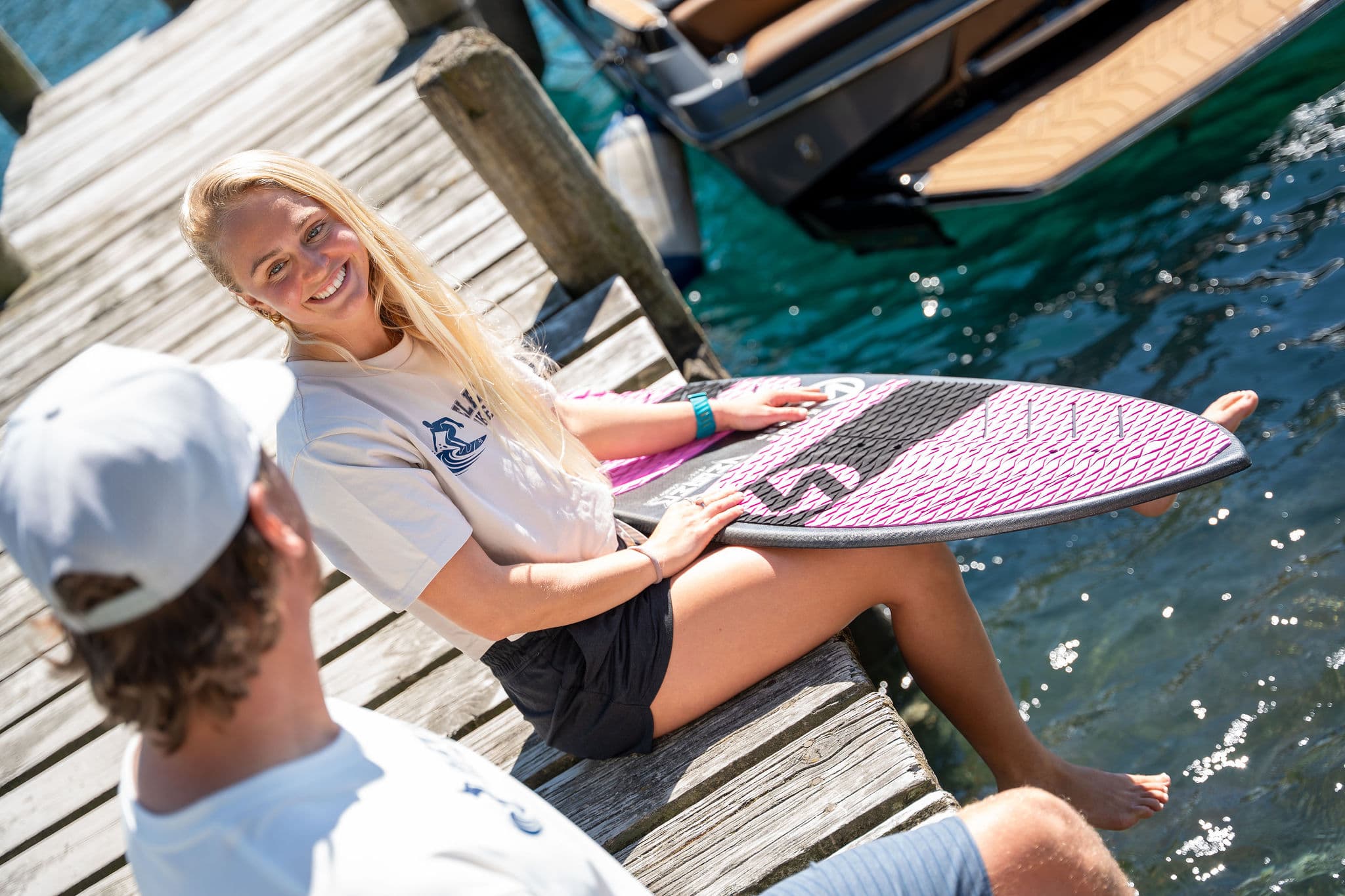
Every wakesurf board on the market is one of two animals: surf style or skim style. They ride differently, they progress differently, and buying the wrong size of either one will hold you back more than any technique mistake. Here's how to tell them apart and pick yours.
Skim style: thin, loose, and quick
A skim board runs under an inch thick, with one fin or none — a sharp rail does the fin's job instead. That makes it feel loose under your feet, easy to spin into 360s and shuvs, and its flat, low-rocker shape carries a lot of speed.
The thin profile has a beginner benefit people miss: at getup time, a thin board flips up to your feet with barely any effort. On the boat we see some of the fastest progression from riders on skim boards once the basics click.
Surf style: thick, stable, and full of drive
A surf-style board is about two inches thick and carries two big fins — up to four. More fins means more drive up the wave, which is what powers really big airs. The extra thickness makes it stable and easy to keep in the wave, which is why it's the comfortable first ride for most families: it floats you well and catches the wave without a fight.
So which one?Buying one board for a boatful of first-timers: surf style, for the stability. Chasing spins and fast progression: skim. And the honest coach answer is to try both when you can — one of them will feel like home, and that's your board.
Size matters more than style
Whatever you buy, check the maker's size chart against your weight and stick to it. A board that's too small can't float you: the nose digs, you sink between pumps, and riding without the rope becomes close to impossible. A board that's too big will cruise along fine but fights every turn, and its long rail loves to catch an edge — and once an edge catches, you're swimming.

The vest: float first, then mobility
Kids and beginners belong in a Coast Guard–approved vest — it gives the most float, which makes the time in the water between attempts easier and safer. Impact vests, the thin flexible ones you see on advanced riders, are built to absorb falls and move freely; they float you less. Earn your way into one once you're comfortable on the wave. Someone on the boat should be wearing a vest every single ride.
The rope: shorter is safer
Use a proper wakesurf rope — shorter than a wakeboard or ski line, with a small handle. Hold it at the very end, and never put an arm through it. Most surf ropes come longer than you need: shorten the rope itself until it puts you right in the sweet spot of the wave, instead of pulling yourself in on the little grip handles. A rope that's the right length does the positioning for you, and it keeps loops away from your limbs.
If it's chilly where you ride, a wetsuit topper, a shorty, and a full suit cover the season between them — early spring sessions are often the emptiest, calmest water you'll get all year.