


Wakesurf guides
How to drive the boat for a wakesurfer
 Emma Galusha#3 world ranked, pro women's skim · Elevate coachAugust 2026 · 7 min read
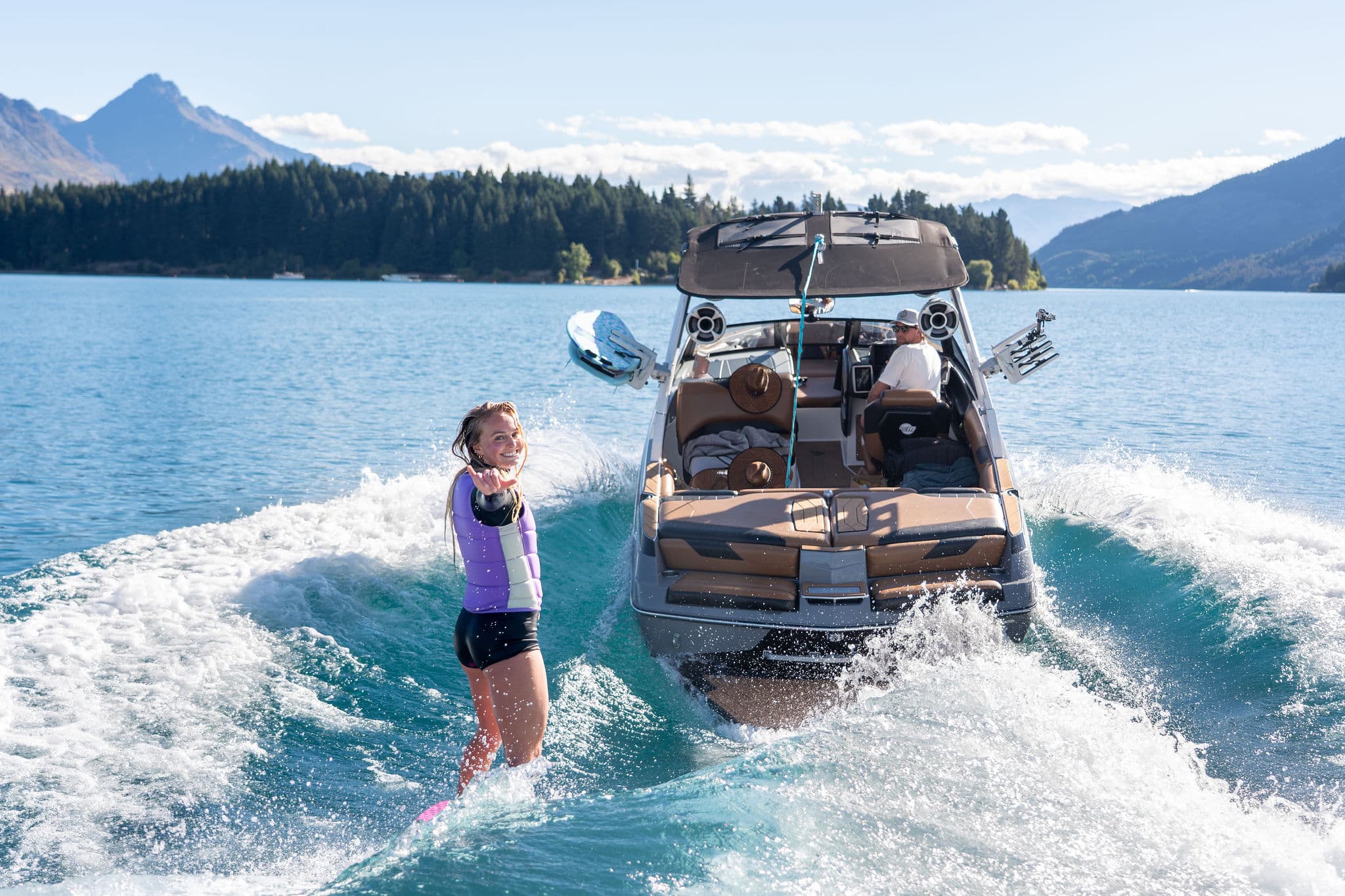
Half of every wakesurf session happens at the wheel. Pull a rider too fast or too slow and their day gets hard for reasons that have nothing to do with their riding. The driving skills below are what we teach the parent, partner, or friend who'll be doing the pulling — and they're what separates a frustrating afternoon from a great one.
Before any of this: set the wave up properly — full ballast, cruise control between 10.5 and 11.5 mph. The beginner's guide covers wave setup step by step.
The pull-up: gradual wins
Center your rider behind the boat, then put it in gear to take the slack out of the rope. When they call ready, feed in power gradually — a little more, then a little more, until cruise control catches the set speed. Then take your hand off the throttle, straighten your line, and check your mirrors.
Going from neutral to full throttle is the classic mistake. The rider needs those first gradual seconds to get up and cut outside the wake before the wave forms; full throttle takes that time away and usually ends the attempt at the top of the wave.
Adjust for the rider: a small kid barely needs power at all — the board flips up for them the moment the boat is in gear, then it's a gentle build. A bigger rider needs a bit more from the start to pop free of the water. And remember a boat only steers under power: if you're lining a rider up and the wheel is doing nothing, you're in neutral.
Four hand signals every crew should know
The rider tunes the wave from behind the boat with four universal signals. Thumbs up: bump the speed up. Thumbs down: bump it down. Hands spreading apart: make the wave bigger — add steepness with the surf tab. Hands closing together: make it smaller. Agree on these before the first pull and the shouting match over the engine noise never happens.
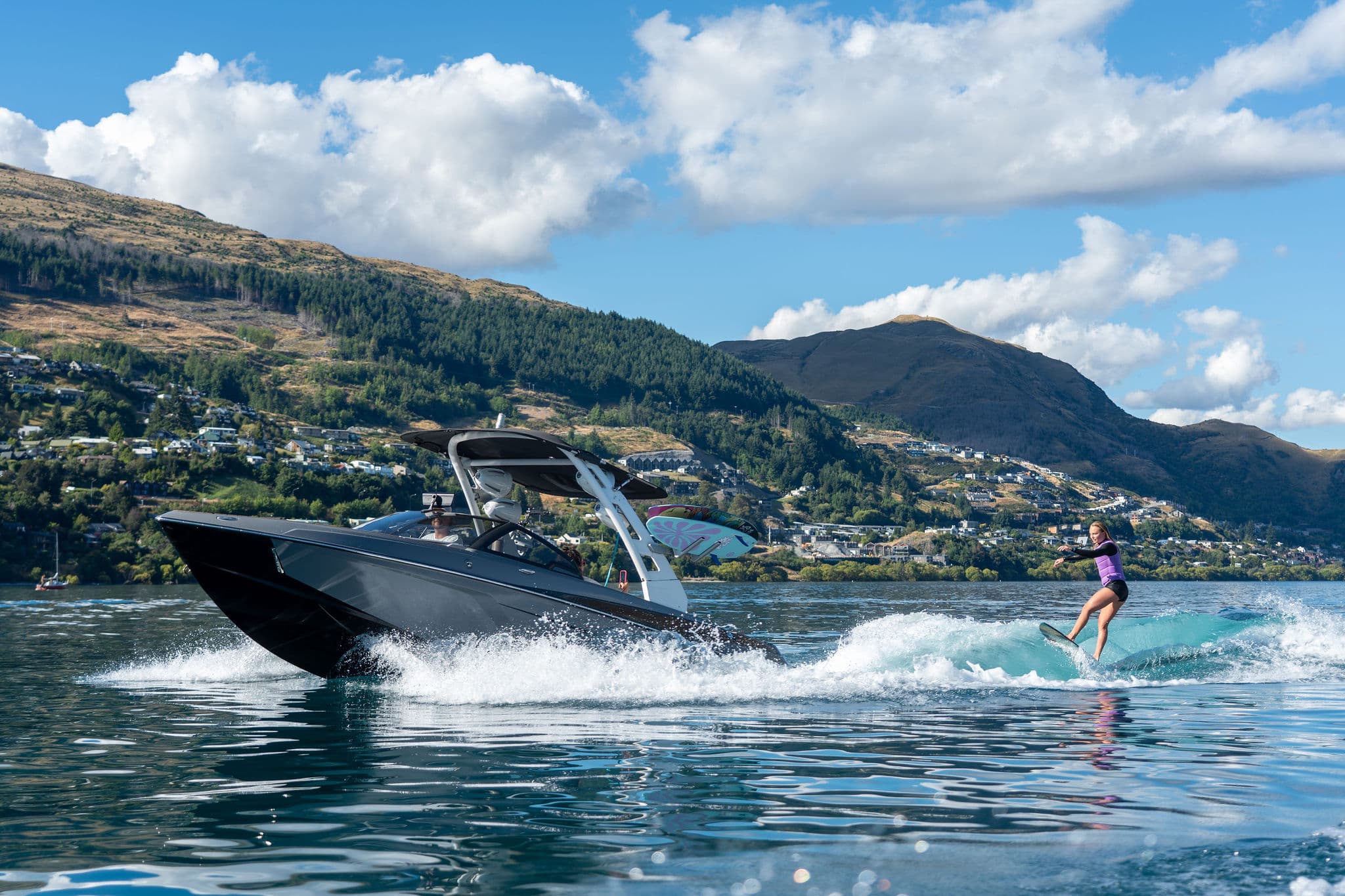
The pickup: neutral, turn away, straight runway
- 01
Throttle slowly back to neutral
The moment your rider falls, ease off — no sudden chop. The boat keeps its forward momentum, and your rider stays close.
- 02
Turn the wheel all the way AWAY from the wave
Regular rider surfing the left side? Wheel hard right. The surf waves roll past harmlessly while the boat drifts round, and nobody on board gets rocked.
- 03
Let the waves pass, then re-engage
Once your own waves have rolled through, you have a clear, flat runway. Put the power back on and point the nose at your rider.
- 04
Approach slow, finish in neutral
You're carrying momentum, so back off early and coast the last stretch into neutral beside the rider. Come in hot and you'll be fighting reverse next to a person in the water — the exact place you want maximum control.
Why the big power turn is the wrong habit
The huge looping turn back over your own wave — the one every wakeboard boat does — punishes a surf boat. Surf waves are big: driving over them rocks the passengers, can put water over the nose onto whoever (and whatever) is up front, and swings the boat a long way from the person floating in the water. Extra distance from a swimmer is extra risk, every time.
Same story for turning toward the wave side after a fall: the boat takes far longer to come around, and your rider sits in the water waiting. Neutral, wheel away from the wave, let the waves pass, straight back. Your fuel bill, your passengers, and your rider all come out ahead.