


Wakesurf guides
Wakesurf training for days off the water
 Emma Galusha#3 world ranked, pro women's skim · Elevate coach & yoga instructorAugust 2026 · 6 min read
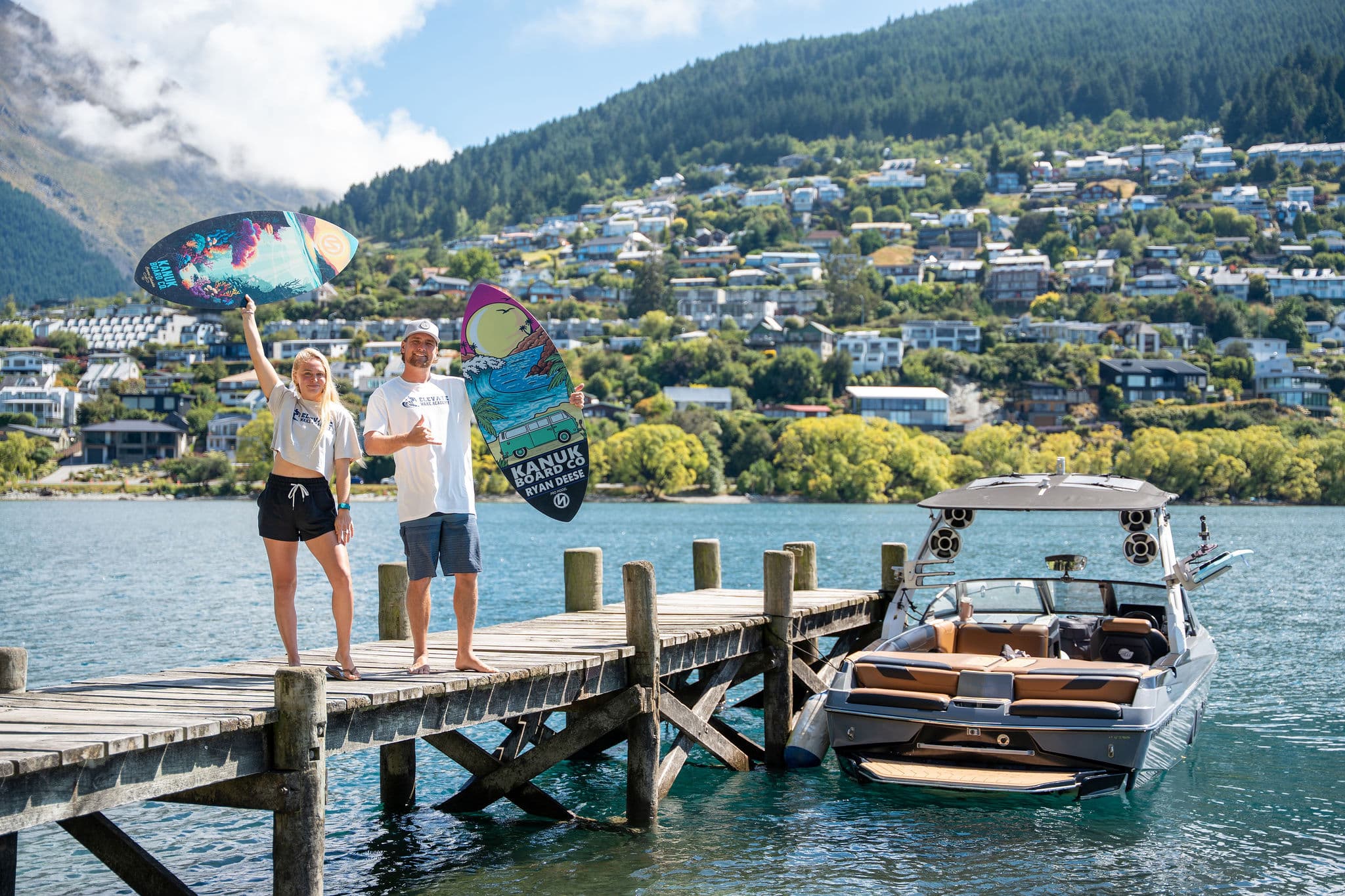
Wakesurfing progress happens between sessions too. The sport lives in your hips, spins through your spine, and balances on one leg at a time — all things you can train on the dock, in the garage, or in a hotel room in February. Alongside coaching, I teach yoga, and this off-water routine is the one I actually do every week.
The pre-session warm-up
Ten minutes on a towel before you ride. Move slowly, breathe, and treat tight spots as places to pause. The sequence works the three things wakesurfing demands most: hip mobility, spinal rotation, and ankle-knee range.
- 01
90/90 hip switches
Seated, both knees bent at ninety degrees, hands behind you. Sweep the knees side to side, aiming the back knee at the ground each way. This is the internal and external hip rotation your surf stance runs on. A few slow rounds, then fold over the front shin and hold.
- 02
Child's pose into cat-cow
Big toes together, arms long, chest melting down — a few breaths. Then to all fours: inhale the belly drops and the gaze lifts, exhale the chin tucks and the spine rounds. Wake the spine before you ask it to spin.
- 03
Hip openers and half splits
From all fours, step a foot out to the side and sink the hips back; a few rocks each side, then extend the leg out and rock into the inner thigh. Walk forward to a low lunge, reach tall, sink the hips. Straighten the front leg into a half splits and fold over the hamstring. Flow lunge-to-splits a few times per side.
- 04
Lunge twists
From the lunge, plant the inside hand and spiral the other arm to the sky. Spins, shuvs, and carves all rotate through the upper back — give the thoracic spine its range before the wave asks for it.
Single-leg strength and balance
Riding is one-legged more often than it looks — every gas-brake correction shifts you foot to foot. Three drills, a few minutes each: stand on one leg with the knee at hip height and circle the ankle both ways; hop side to side, landing one-legged and sticking each landing with your eyes fixed on one point (a steady gaze is a balance superpower, on land and on the wave); and the single-leg deadlift — lean forward, leg extending back, drive through the heel to stand. Add dumbbells as it gets easy.
The strength work has a second job: injury prevention. The sport twists, spins, and shifts load fast, and loaded single-leg training is what lets your knees and ankles cash the checks your riding writes.
The DIY balance board: a skim board and a towel
Skip the equipment purchase: take a board — fins OFF, always — roll a beach towel tight, knot it once or twice into a firm ball, and set the board across it, towel under the middle. Step on and keep every edge off the floor. Congratulations, you own a balance trainer.
Best tricks to rehearse on it: the body varial (shoulders open, hop, feet swap to switch, and back) and the 180 shuv (back foot flicks, board spins flat, land soft). Rehearsing the exact motion in the garage all winter is why some riders come back in spring better than they left in fall — the advanced tricks guide covers both moves on the wave.
Film everything
The last off-water skill is reviewing your on-water footage. There's almost always someone on the boat holding a phone — put them to work. Falling off 360s at the top of the wave? Start the spin lower. Body collapsing mid-trick? Stand taller into it. Your falls are data, and video turns a mystery into a to-do list.